
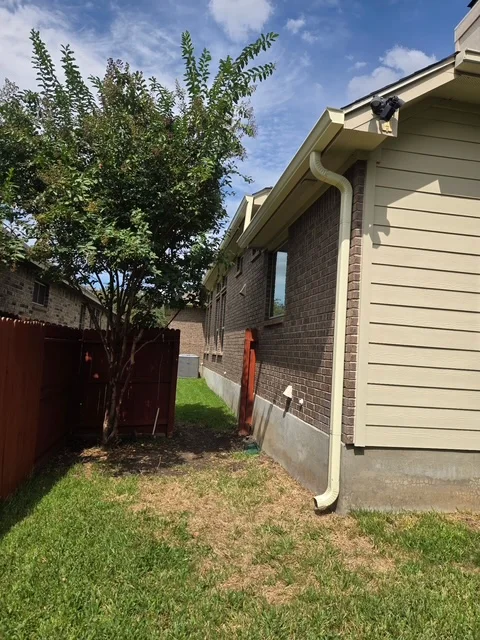
Leaf guards can make sense for a La Vernia home when leaves and larger roof debris repeatedly collect in the gutters. They are not a cure for a sagging run, restricted outlet, poor pitch, or a downspout that releases water in the wrong place.
Before booking, connect the product decision to the complete roof-water route. S&H’s Leaf Guard service in La Vernia covers the local service details, while the La Vernia gutter service guide helps you consider the property as a whole.
A leaf guard manages debris. The gutter still manages water.
A sound decision keeps both jobs visible. The guard needs to limit the material that causes repeat buildup while still allowing runoff to enter the gutter and move through clear outlets and downspouts.
- It can help with
- Reducing larger leaves and debris that enter a serviceable gutter.
- It cannot correct
- Loose attachments, poor pitch, standing water, undersized outlets, or a weak discharge route.
- It should account for
- Tree cover, fine debris, roof valleys, existing gutter condition, and future access.
Are leaf guards worth it for a La Vernia home?
They can be worthwhile when the property has a recurring debris problem and the existing gutter system is ready to be covered. Mature trees close to the roof may deliver broad leaves, small seed material, twigs, or fine debris. Each behaves differently, so the useful question is not simply whether a guard blocks “leaves.” Ask how the proposed design handles what actually reaches your roof.
Water entry matters just as much. Valleys can concentrate runoff at one point, and a covered gutter still has to accept that flow. Central Texas has a documented history of high-intensity rainfall events, as shown in the National Weather Service’s regional flood history. That does not determine one product for every home, but it does make valley flow, outlet capacity, and downspout routing important parts of the conversation.
What is the downside of leaf guard protection?
The biggest downside is an unrealistic expectation. Leaf guards can reduce larger debris inside the trough, but they do not make the roof edge maintenance-free. Fine material may remain on the cover or work through openings. Debris can gather where roof planes meet, and water can behave differently at a valley than it does along a simple straight run.
A guard also changes access to the gutter beneath it. Before installation, ask how exposed surfaces will be checked, how the trough and outlets can be reached later, and whether a section can be removed and replaced if repair becomes necessary. If the gutter already holds water, pulls away, leaks, or overflows when it is clear, address that condition first through gutter repair or maintenance.
What affects the price of a leaf guard estimate?
Search results often lead with an average price or ask for the cost of guards on a 1,500-square-foot house. Neither figure describes the roof edge where the work happens. Two homes with the same interior square footage can have very different perimeters, heights, valleys, corners, attached patios, garages, detached structures, and access conditions.
A useful estimate should identify the measured runs receiving protection, the proposed guard, any cleaning or repair needed first, difficult access, treatment at valleys and corners, and whether existing outlets and downspouts remain suitable. Compare the complete installed scope—not a house-size shortcut or a per-foot number detached from preparation.
Which is better: LeafGuard, LeafFilter, or another leaf guard?
LeafGuard and LeafFilter are brand names, not universal performance grades. A brand comparison is only useful when the proposals identify what is being installed on your home. One estimate may involve a different cover design, gutter condition, preparation scope, service arrangement, or warranty document than another.
Ask each estimator the same questions: Does the proposal include new gutters or protection for the existing system? How does the design respond to the debris and valley flow on this roof? What cleaning or repairs happen first? How will the system be inspected and serviced? What do the written warranty terms cover, exclude, and require? The better choice is the proposal that answers those questions clearly for your property.
What should happen before and after leaf guard installation?
Before installation, the visible gutter system should be checked for debris, standing water, loose sections, leaking joints, restricted outlets, and practical downspout discharge. Note where overflow appears during rain and point out roof valleys or trees that deliver the most material. If the existing system is not serviceable, the estimate should separate the necessary correction from the guard work.
After installation, observe the roof edge safely from the ground during rainfall. Look for runoff entering the gutter rather than overshooting it, water moving through the downspouts, and discharge leaving in the intended place. Continue to watch exposed guard surfaces, valleys, corners, and outlet areas over time. Leaf protection can reduce debris work, but the complete system still benefits from periodic attention.
La Vernia leaf guard FAQ
Are leaf guards worth it for a La Vernia home?
They can be a useful way to reduce larger debris entering the gutter when nearby trees create recurring buildup. Value depends on the debris type, roof valleys, condition of the existing gutters, and how easily the guarded system can be inspected and serviced. A guard should solve a known debris problem rather than cover an unresolved drainage problem.
What is the downside of a leaf guard system?
A guard does not make the whole gutter system maintenance-free. Fine material can remain on the guard or reach the trough, concentrated runoff still has to enter at valleys, and covered gutters still need observation and occasional service. Some designs also change how the gutter can be accessed, so future cleaning and repair should be discussed before installation.
What is the average price for leaf guard installation?
A broad average cannot describe a property-specific scope. Measured roofline, guard design, gutter condition, cleaning or repair needed first, roof height, corners, valleys, access, and the number of runs all affect an estimate. Ask for a written total that identifies the product and the preparation included.
Can I estimate leaf guard cost from a 1,500-square-foot house?
Not reliably. Interior square footage does not show the length and height of the roof edges, roof complexity, attached or detached structures, valley locations, access, or the condition of the existing gutter system. Those details need to be measured at the property.
Which is better, LeafGuard or LeafFilter?
Neither brand name is a universal answer for every roof. Compare the exact proposed product, whether the scope includes new gutters or protection for existing gutters, how the design handles the debris and concentrated runoff on your roof, future service access, the written warranty terms, and the complete installed price.
Do leaf guards eliminate gutter cleaning and maintenance?
No. Leaf protection can reduce larger debris entering the trough, but exposed surfaces, roof valleys, corners, outlets, and downspout entries still need to be observed. Fine debris, movement, standing water, or repeat overflow can still call for cleaning, maintenance, or repair.