
Nearby tree cover
The type and amount of falling material influence how much protection and ongoing attention the system may need.
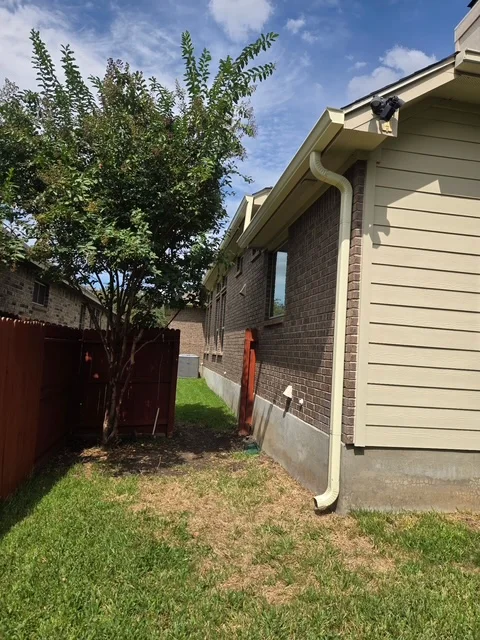
Spend less time worrying about leaves and clogs with gutter protection selected for the debris that actually reaches your roof.
Request leaf guardBefore adding protection, it is worth checking whether the gutters are secure, correctly pitched, and draining through clear outlets and downspouts.
Broad leaves, fine material, roof granules, and seasonal buildup do not move the same way. The right approach considers the debris around the property and the water concentration coming from the roof.
Around San Antonio-area homes, the best guard choice depends on the kind of debris reaching the roof, how quickly water arrives at valleys, and the condition of the gutters underneath.
See where S&H works ↗The type and amount of falling material influence how much protection and ongoing attention the system may need.
Roof valleys can deliver water quickly. The guard and gutter must still accept runoff at those concentrated areas.
Loose, damaged, or poorly draining gutters should be corrected before they are covered.
Leaf protection is most useful when it is selected for the material that actually reaches the roof. Broad leaves, small seed pods, fine dust, and roof granules behave differently at a covered gutter. S&H first checks the run below so a guard does not conceal standing water, loose attachments, or a restricted outlet.
The opening and surface that shed large leaves may handle finer material differently. Nearby trees and the buildup already found in the gutter are better guides than a one-size-fits-all promise.
Water arriving quickly from a valley still has to enter the gutter through or across the guard. Those concentrated points deserve specific attention during selection and installation.
Guards can reduce cleaning inside the trough, but exposed surfaces and fine debris still need observation. The completed system should allow inspection and service without treating it as maintenance-free.
Ask how the recommended guard handles the debris around your roof, concentrated valley flow, the condition and size of the existing gutter, and future access for inspection or repair. The recommendation should explain those tradeoffs instead of promising a maintenance-free system.
The guard decision starts with debris and flow, then checks the existing system so new protection is installed on a sound drainage path.
Look at tree cover, roof material, and the buildup that normally reaches the gutter.
Confirm the existing gutters, outlets, and downspouts are ready to perform.
Install the selected guard with attention to roof-edge flow and future service access.
Tell us about the trees around your home and where clogs or overflow keep returning.