
Sagging or standing water
A low section can hold water after rain and place extra weight on hangers and fascia.
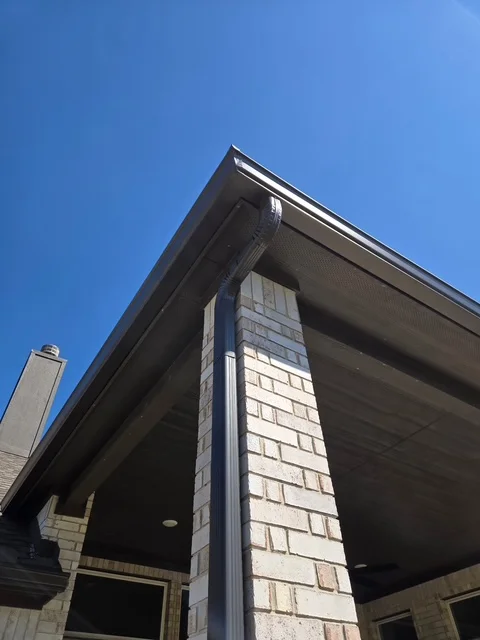
Stop the leak, sag, separation, or overflow before the next storm sends water back to the same trouble spot.
Request gutter repairRepeated overflow, staining below a joint, pooling water, pulling fasteners, and runoff behind the gutter are all reasons to take a closer look.
A leak may come from a joint or outlet, but overflow can also come from debris, poor pitch, insufficient drainage, or a downspout restriction. S&H evaluates the connected system so the recommendation fits the problem.
Repair recommendations depend on whether the trouble is isolated to a joint or hanger, follows a longer sagging run, or begins farther upstream at an outlet or roof valley.
See where S&H works ↗A low section can hold water after rain and place extra weight on hangers and fascia.
Joints and penetrations are natural places to inspect when water appears below the gutter.
This can point to fit, roof-edge details, pitch, or attachment issues that deserve a closer diagnosis.
Movement can interrupt flow and allow concentrated water to reach siding, landscaping, or the building edge.
Two homes can show water at the same corner for different reasons. One may have a failed seal; another may have a low run that pushes standing water toward the joint. S&H traces the visible symptom through hangers, pitch, outlets, and downspouts before deciding whether a focused repair can hold.
A sound run with one failed corner, end cap, outlet, or attachment may be a good repair candidate when the surrounding material still holds alignment and the system drains correctly.
Overflow without obvious damage can start upstream. Debris, a restricted outlet, a long low section, or concentrated valley runoff should be ruled out before sealing the place where water happens to escape.
Multiple loose runs, repeated leaks, widespread corrosion, or a layout that has never drained well can make repeated spot work less useful. S&H explains when the scope has moved beyond one repair.
A useful repair visit traces the symptom through the connected run before determining which component needs attention.
Identify where water appears and what happens before, during, and after rainfall.
Review slope, attachments, joints, outlets, and downspout flow—not only the obvious spot.
Address the failed component and explain when a broader correction makes more sense.
Show us the leak, sag, separation, or overflow you have noticed and we’ll help you choose the right repair.