
Fasteners and alignment
Loose attachment points and low sections can change pitch and allow water to sit or escape.
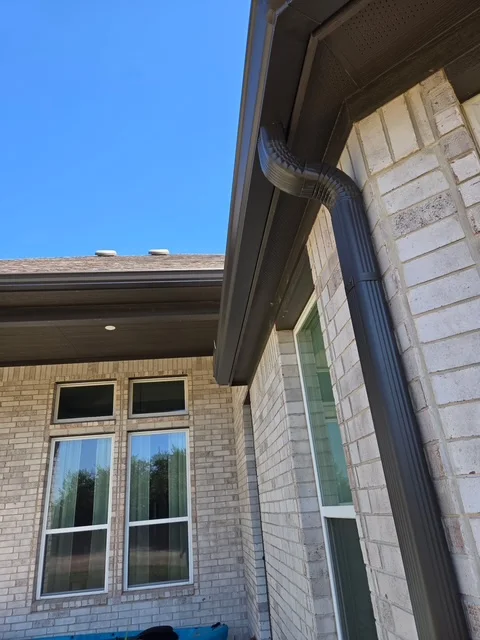
Catch loose attachments, small leaks, debris, and changing drainage before they turn into a bigger gutter problem.
Request gutter maintenanceFast rain, dry spells, tree debris, roof granules, and ordinary movement can alter flow over time. Periodic attention keeps the system understandable.
Useful maintenance follows water from the roof edge through the gutter, into the outlets, down the downspouts, and toward the ground-level discharge area. A weak link anywhere along that route can affect performance.
A maintenance visit should respond to the system’s age, tree cover, recent storms, and any changes visible along the fascia or at ground-level discharge points.
See where S&H works ↗Loose attachment points and low sections can change pitch and allow water to sit or escape.
Corners, end caps, and outlet areas deserve attention because they interrupt otherwise continuous runs.
Clear flow depends on both an open gutter and a sensible place for downspouts to release water.
A ground-level look after heavy weather can reveal new overflow, separation, or concentrated runoff.
Central Texas weather can move between dry stretches and intense rain. A system may look quiet for weeks and then reveal a low spot or restricted outlet in one storm. S&H uses maintenance to identify what needs attention now, what should be watched, and what would require a separate repair.
Hangers, long runs, corners, and downspouts can shift over time. Small alignment changes matter when they leave water standing or pull the gutter away from the fascia.
End caps, corners, outlets, and transitions interrupt otherwise continuous seamless runs. Visible seal wear or staining at those locations helps set the next maintenance priority.
Extensions can move, landscaping can change, and discharge areas can erode. Maintenance should include the place water exits so the roof-edge system still works with the property below.
Maintenance combines observation and targeted service, with priorities based on what has changed since the gutters last performed well.
Start with visible flow patterns, standing water, staining, and changes along the roofline.
Clean or correct accessible issues based on the condition of the system.
Identify repairs, guard options, or drainage changes that may improve longer-term performance.
Tell us what has changed since the system last worked well and request a gutter checkup.