
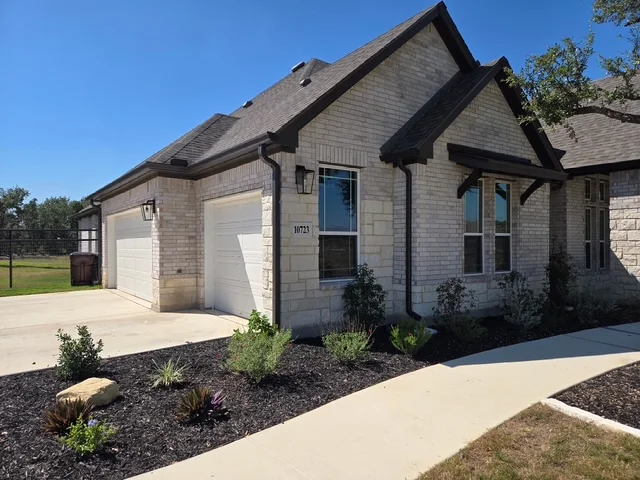
Fair Oaks Ranch properties can pair mature tree cover with multi-plane roofs, custom exterior finishes, and ground that falls away quickly. Those conditions make the downspout destination just as important as the gutter run.
Start with S&H’s dedicated Fair Oaks Ranch gutter installation page and the broader Fair Oaks Ranch service guide. Then use the questions below to compare the actual coverage, options, and drainage plan in each estimate.
Trace the plan from roof to release point
Fair Oaks Ranch operates a municipal stormwater program because runoff moves through a connected local drainage system. At one property, the practical place to start is the part you can control: how roof water is collected, concentrated, and released.
Read the city’s stormwater information- 01Roof planesIdentify the edges, valleys, and concentrated flow points feeding each run.
- 02Gutter runsMatch pitch, support, corners, outlets, and capacity to the roof above.
- 03DownspoutsChoose routes around entries, patios, walks, drives, and visible elevations.
- 04Ground routeAccount for slope, beds, lower walls, and existing drainage features.
Seven details to settle before you book
The clearest proposals explain what will be installed and why the layout fits the home. Ask for property-specific answers rather than a standard package.
Which roof edges actually need gutter coverage?
Some Texas homes have gutters only in selected areas, while others have little or no coverage. That does not create one rule for every house. Look at where runoff leaves your roof now: over entries, beside planting beds, near walks, at patios, or along the foundation edge.
Ask the installer to identify the roof planes and valleys feeding every proposed run. Each section should have a clear collection purpose and a workable outlet—not just fill an open roof edge.
What is included in the gutter installation price?
A price based on home square footage or one citywide average cannot describe a specific roofline. Measured gutter length matters, but corners, valleys, roof height, access, material, profile, outlets, downspouts, old-gutter removal, fascia condition, and optional leaf protection can all change the scope.
Request a written estimate that identifies those items. When comparing proposals, first make sure the roof coverage, components, removal work, and options match; then compare the totals.
What existing conditions could change the scope?
The estimate walkthrough should include visible fascia condition, roof-edge details, existing gutters, long runs, inside and outside corners, valley discharge, and safe access around the building. If old gutters hide part of the attachment surface, ask how newly exposed damage would be handled.
That does not mean guessing at a hidden repair. It means the proposal should say what is included and describe the next decision if removal reveals a condition that could not be seen beforehand.
Which material, profile, and color fit the home?
S&H offers practical seamless aluminum and can discuss steel or copper when the roofline and exterior call for a different material. Ask for the proposed material, profile, color, and visible downspout locations to be named in the estimate.
If an HOA or architectural-review process applies to your address, confirm any color, profile, or placement requirements before installation is scheduled. Approval requirements vary, so the property owner should verify what applies to the specific project.
Where will every downspout release the water?
A downspout gathers runoff from a broad roof area and releases it at one concentrated point. On a sloped Fair Oaks Ranch lot, that point needs to make sense for landscaping, lower walls, patios, gates, walks, drives, and the direction water already moves.
Ask the installer to walk each outlet route at ground level. A neat downspout location is not enough if the release point sends water across an occupied area or toward another vulnerable edge.
Should leaf guards be part of the first installation?
Mature oaks, cedars, and other nearby trees can make debris protection worth discussing. The base system still comes first: runs should be secure, outlets should be clear, downspouts should be correctly routed, and the discharge plan should work before a guard is added.
Leaf protection can reduce larger material entering the gutter, but exposed surfaces, fine debris, valleys, and outlets still need observation and occasional maintenance.
How will the finished system be checked?
Before the job is complete, return to the agreed route: secure runs, drainage toward the outlets, connected downspouts, and release points that match the written plan. Confirm how old materials will be handled and whether any work area needs to remain clear on installation day.
Afterward, watch the system safely from the ground during rain. Overflow at a valley, water behind a run, a dripping corner, or discharge collecting in an unexpected place gives the installer specific information to evaluate.
A complete quote should make six choices visible
Use this list to spot missing details before you approve the work.
- Coverage
- The exact roof edges and structures included.
- Components
- Material, profile, color, corners, outlets, and downspouts.
- Conditions
- Access, removal work, fascia assumptions, and hidden-condition handling.
- Drainage
- The planned direction and release point for every downspout.
- Options
- Leaf protection and other add-ons separated from the base system.
- Completion
- The final checks and the way concerns will be addressed.
Fair Oaks Ranch gutter installation FAQ
How much does gutter installation cost in Fair Oaks Ranch, TX?
The total depends on the roofline and proposed drainage system. Measured gutter length, roof height and access, corners and valleys, fascia condition, material, profile, outlet and downspout count, removal work, discharge routes, and optional leaf protection can all affect the estimate. Compare written proposals that cover the same work instead of relying on a citywide average.
What should I ask a gutter installer before booking?
Ask which roof edges will be covered, what each run collects, how valleys and long elevations affect the plan, where outlets and downspouts will go, where the water will discharge, what material and profile are proposed, what the estimate includes, and how the finished system will be checked.
Why do some Texas homes have few or no gutters?
Roof shape, age, original construction choices, and site drainage vary from home to home. The useful question is not what every Texas house has; it is where runoff from your roof lands and whether it creates trouble at entries, beds, walks, walls, or the foundation edge. Coverage can then be planned around the actual roof and property.
Should gutter guards be added during a new installation?
They may be worth discussing when mature trees create recurring debris. First make sure the gutter runs, outlets, downspouts, and discharge route are sound. Leaf protection can reduce larger debris entering the system, but it does not make gutters maintenance-free or correct a weak drainage layout.
How can I tell whether two gutter estimates cover the same work?
Match the roof edges, material, profile, color, corners, outlets, downspouts, old-gutter removal, known fascia work, discharge plan, and optional add-ons line by line. If one proposal is vague about a major item, ask for clarification before comparing the totals.