
Leaf guard cost: what are you paying to protect?
Adding a guard to sound gutters and replacing the entire gutter system are different purchases. Know which one a price covers before you set your budget.
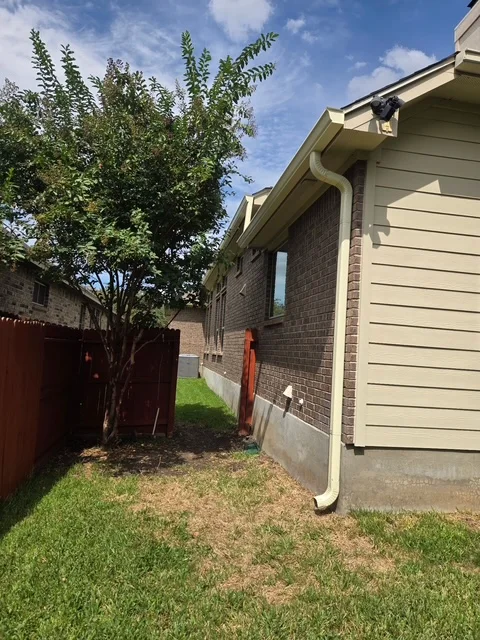
As a starting budget, HomeGuide’s national gutter guard cost guide reports $15–$45 per linear foot with professional installation, or $3,000–$9,000 for 200 feet. These are broad national figures, not S&H prices or a San Antonio average. Your product and installation scope may differ.
For your San Antonio-area home, start by separating the cost of protection from any work the gutters already need. S&H’s leaf guard service considers the debris, roof edge, and existing drainage system together.
Does the price keep your gutters or replace them?
Add-on protection
A cover or screen is fitted to a compatible, serviceable gutter. Your budget needs to account for cleaning or correcting the existing system before it is covered.
Gutters with integrated protection
The gutter itself is part of the purchase. Compare removal, new runs, corners, outlets, and downspouts alongside the debris protection.
“Leaf guard” is also used as a general description, while LeafGuard describes its branded product as a one-piece gutter system. LeafFilter describes a micromesh product installed after gutter preparation. Those designs explain why two branded proposals may contain different work; the names alone do not establish which quote will cost less at your home.
Read the product named in each proposal rather than assuming every company installs the same system. If new gutters are included, our gutter installation cost guide explains the additional drainage decisions behind that portion of the price.
A per-foot price only helps when the included work is clear
Linear feet measure the gutter runs receiving protection, not your home’s floor area. A garage, patio roof, upper story, or several short roof edges can change the coverage. Two homes with the same square footage can need different amounts of guard.
For example, a 200-foot job at $15 per foot totals $3,000 before anything excluded from that rate. Do not add labor a second time if the rate already includes installation. Ask whether the written total includes these items:
- Guard and fitting
- The exact product, gutter size, attachment method, and treatment at corners and roof valleys.
- Preparation
- Cleaning, clearing outlets, and any repairs needed for loose, leaking, or poorly draining gutters.
- Safe access
- Work at upper stories, steep roof edges, sloped ground, or tight side yards that changes setup and labor.
- Service afterward
- How sections open for inspection, who handles future cleaning, and what any written warranty covers and requires.
A guard cannot correct a sagging run or a restricted downspout. Separating necessary repairs from the guard price helps you see what you are paying to restore and what you are paying to protect.
Will fewer cleanings justify the investment?
Use your actual cleaning bills and the proposed guarded-system upkeep. Subtract the expected annual upkeep from what you spend now; that difference is the potential annual saving. Divide the installed price by that saving to estimate a simple payback period.
Illustrative math: a $3,000 installation with $250 in net annual maintenance savings takes 12 years to recover through those savings alone. The $250 is an example, not a forecast. If cleaning costs barely change, the payback may never arrive. Future repairs, replacement, and changing service prices also affect the result.
Reduced debris work and fewer roof-edge service visits can still matter to you even without a quick financial return. But guards are not maintenance-free: exposed surfaces and fine debris still need attention. Ask how nearby trees and concentrated valley runoff affect the recommended design and its care. A lightly shaded roof with little buildup may have a different value calculation from one with recurring leaf clogs.
Discuss coverage for the specific problem runs if whole-home protection stretches your budget. Keep the uncovered runs and shared outlets in your maintenance plan, and compare partial and full coverage as separate scopes.
Leaf guard cost FAQ
How much do leaf guards cost per foot?
HomeGuide reports a national professional-installation range of $15–$45 per linear foot. That is a budgeting reference, not an S&H rate or a San Antonio average. The product, measured coverage, gutter condition, height, and access determine your estimate. Confirm whether preparation and new gutters are included.
Is LeafGuard the same as adding guards to existing gutters?
No. LeafGuard is a brand with a one-piece gutter system. A guard added to existing gutters retains the serviceable gutter underneath. A full-system proposal and a guard-only proposal cover different work, so compare their written inclusions before comparing totals.
Will leaf guards pay for themselves in cleaning savings?
Possibly, but savings are not guaranteed. Compare the installed cost with the annual cleaning expense you could avoid, after subtracting the upkeep the guarded system still needs. If there is little reduction in annual maintenance expense, the financial payback may be long or may never occur.
Can I add guards only where trees drop leaves?
Ask for a quote that identifies the exact runs receiving protection. Partial coverage can target a recurring debris problem, but uncovered sections and shared outlets still need attention. Compare that scope with whole-home coverage rather than assuming the same per-foot rate or maintenance needs.